
A replacement quote for central heating and cooling in the Sacramento Valley usually arrives as one number, but that number is built from at least six separate layers of cost. The outdoor unit and indoor coil are the most visible part, yet refrigerant work, duct testing, permits, electrical changes and labor can together come close to the price of the hardware. California’s 2025 Energy Code has governed residential permits since January 1, 2026, and the refrigerant change that began in 2025 has altered which old parts can stay, so two quotes for what sounds like the same system can now land thousands of dollars apart for reasons that never appear on a spec sheet.
Seeing those layers clearly is far easier when the contractor itemizes them, and that is how United Climate Control prices residential and commercial installations from its Auburn base. Working under California C-20 license #1128777, the team installs Daikin and Goodman equipment, handles repair and maintenance for homes and businesses, and offers financing for larger replacements across Roseville, Rocklin, Folsom, Elk Grove, Davis, Vacaville, Grass Valley and many towns in between. If you want each layer below priced against your own house rather than a rule of thumb, you can book an assessment online.
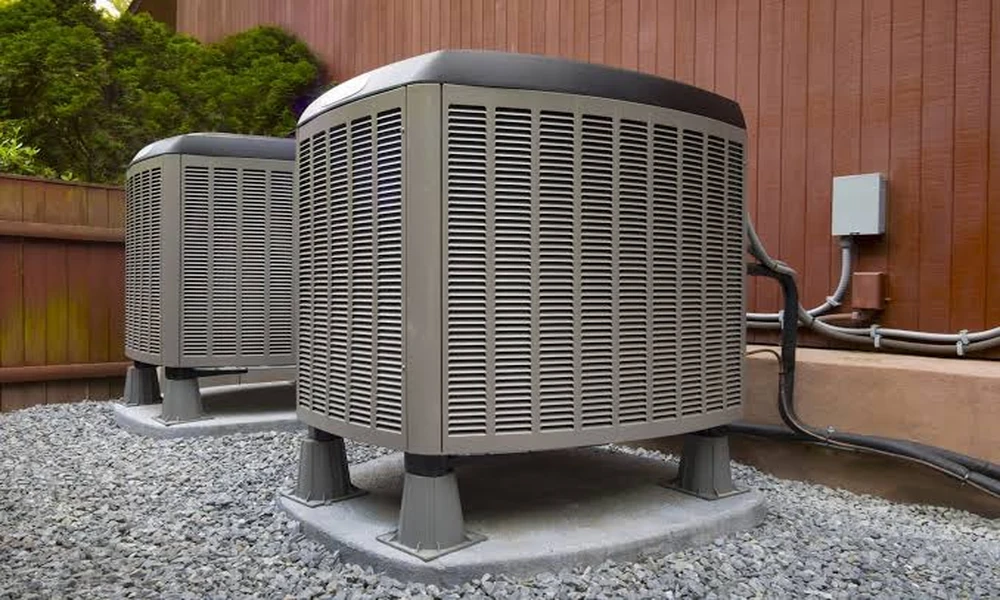
The Box Outside and the Coil Inside
Equipment is the largest single line, and efficiency tier drives most of its swing. California sits in the federal Southwest region, so a basic split air conditioner or heat pump starts at 14.3 SEER2. A single stage unit at that floor costs far less than an inverter driven heat pump rated 18 SEER2 or higher, but the gap narrows quickly in a place where July afternoons regularly pass 100°F. A Sacramento or Elk Grove home that runs its AC hard from June through September recovers the premium faster than a home cooled by the delta breeze most evenings.
Heating choice matters just as much. In the valley floor, mild winters suit a heat pump that replaces both the AC and the furnace. In Auburn, Grass Valley and Nevada City, colder winter nights make a dual fuel setup (heat pump plus gas furnace backup) a reasonable middle path, at a higher equipment cost than a heat pump alone.
The indoor coil now almost always changes too. A new outdoor unit built for today’s refrigerants needs a coil rated for the same refrigerant, so the old practice of swapping only the condenser and keeping a ten year old coil has largely ended.
Refrigerant, Line Sets and New Safety Parts
Most newly manufactured residential systems now use A2L refrigerants, R‑32 in Daikin and Goodman lines and R‑454B in several other brands. These are classed as mildly flammable, so many air handlers now ship with a refrigerant leak sensor that triggers the blower if a leak occurs. That sensor, its wiring and its setup are part of the price.
The copper line set is the other variable. A correctly sized, undamaged set can often be flushed, pressure tested and vacuumed for reuse, while an undersized or kinked one buried in a finished wall means new copper and patching. Some contractors still offer leftover R‑410A equipment, which the EPA’s Technology Transitions rules allow when the components were made before 2025. That route can look cheaper up front compared with an A2L system, but service refrigerant for R‑410A is only going to get scarcer over the life of the equipment.
Ductwork and the Test That Surprises People
Duct costs vary more than any other layer because they depend entirely on the house. Under Title 24, when heating or cooling components are installed on a ducted system, or more than 25 feet of duct is replaced, the ducts must be leak tested. The usual targets are 15 percent total leakage or 10 percent to the outside, or sealing all accessible leaks. Duct systems built or sealed with asbestos are exempt from testing, which raises its own handling questions. Refrigerant charge is verified as well.
A 1990s Roseville tract home with metal trunk lines often passes after a few hours of mastic work. A 1970s Carmichael ranch with crushed flex duct in a 140°F attic may fail badly and need a new duct system, which carries stricter leakage limits of its own. These results are confirmed by an independent rater, a role the 2025 code now handles through the California Energy Commission’s Energy Code Compliance program, and the rater’s visit is a line on the bill.
Permits, Power and the Hours of Labor
Permit fees depend on who issues them. The City of Auburn, Placer County, Sacramento County and cities like Folsom or Davis each set their own schedule, and a final inspection is required before the job closes. A quote that leaves out the permit can look a few hundred dollars cheaper, yet an unpermitted changeout can surface later during a home sale or an insurance claim.
Electrical work is easy to overlook. Moving from a gas furnace to a heat pump with electric backup heat may need a larger breaker, a new circuit, or a panel with more capacity, and an older 100 amp panel can turn a straightforward swap into a bigger project.
Labor ties everything together: removal and disposal of old equipment, refrigerant recovery, a new pad or wall bracket, condensate lines, thermostat setup and startup. Attic air handlers take longer in August heat than closet units, and commercial rooftop replacements add crane time and, in many cases, economizer testing.
Reading the Quote as a Whole
| Cost layer | Fixed once you choose it, or set by the house | Local factor that pushes it higher |
|---|---|---|
| Outdoor unit and coil | Fixed by efficiency tier and system type | Long valley cooling season favors higher SEER2 |
| Refrigerant parts and line set | Set by the house | Undersized or inaccessible copper runs |
| Ducts and leakage testing | Set by the house | Older attic duct in hot foothill and valley attics |
| Permit and third party verification | Fixed by jurisdiction | Separate fee schedules in each city and county |
| Electrical changes | Set by the house | Older panels in pre 1980s neighborhoods |
| Labor and removal | Partly both | Attic installs, rooftop units, summer scheduling |
The table also explains why quotes differ. When one bid is far below another, the gap usually sits in the rows set by the house: one contractor priced the duct test and possible repairs, the other assumed a pass.
Incentives have shifted as well. The federal 25C credit that covered 30 percent of a heat pump up to $2,000 ended for systems installed after December 31, 2025, so it no longer trims a 2026 bill. Utility rebates and manufacturer promotions come and go, and financing spreads the cost rather than shrinking it, so check what your utility currently offers before signing.
The most useful habit when comparing bids is to line them up layer by layer rather than by bottom line. A quote that names the refrigerant, the coil, the duct test plan, the permit and any electrical work tells you exactly what you are paying for, and it leaves far fewer surprises for the day the old system comes out.