
-
Key Takeaways
- Use mild soap and water or a pH-neutral cleaner for daily cleaning.
- Avoid placing hot cookware directly on quartz surfaces.
- Do not use abrasive pads or harsh chemicals like bleach.
- Wipe spills immediately to prevent possible staining.
- Use chopping boards and trivets to protect the surface.
Introduction
Installing a quartz stone top in Singapore instantly enhances the appearance of any kitchen or dining space. While some may compare its resilience to that of a sintered stone table top, quartz surfaces are popular in their own right because they combine elegance, durability, and low maintenance.
Quartz is an engineered material made from crushed natural quartz mixed with resin binders. This quartz stone creates a strong, non-porous surface that resists stains and bacteria. While durable, the resin component can still be affected by excessive heat, harsh chemicals, and improper cleaning habits. Fortunately, maintaining quartz is simple when you follow a few basic practices.
Daily Cleaning Made Simple
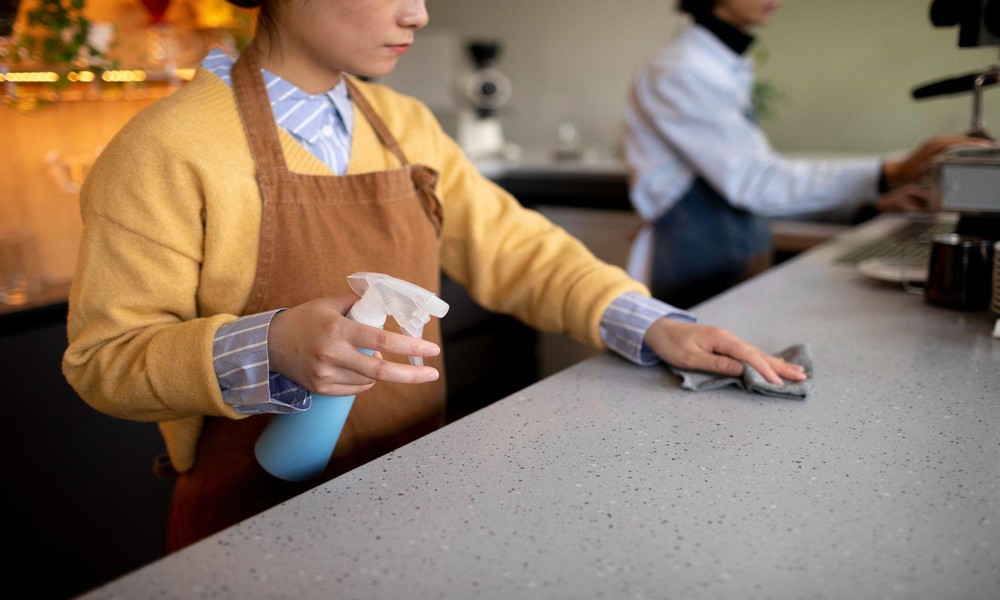
Regular cleaning does not require expensive stone-cleaning products. A soft microfibre cloth with warm water and mild soap is usually enough to remove dirt, grease, and food residue. Gentle cleaning preserves the polished appearance without damaging the resin.
Many homeowners mistakenly use strong degreasers or heavy-duty sprays on their countertops. Over time, these harsh cleaners may weaken the resin bond and create a dull or cloudy finish. To avoid this, always choose pH-neutral cleaning products designed for delicate surfaces.
For stubborn dried food or spills, avoid using metal scrapers or abrasive pads. Instead, place a damp cloth over the residue for a few minutes to soften it. Once loosened, gently lift the debris using a plastic scraper or the edge of a card. This method removes dirt safely without scratching the surface.
Understanding Heat Damage
One of the most common misconceptions about quartz is that it is completely heatproof. Although quartz can tolerate moderate heat, it is not as heat-resistant as some other materials. The resin within the surface may discolour, warp, or crack when exposed to extreme temperatures.
Placing hot pots, pans, or baking trays directly onto a quartz tabletop can result in permanent burn marks or thermal shock damage. To prevent this, always use trivets, heat pads, or protective mats under hot cookware.
This habit becomes especially important in busy kitchens where the countertop is used frequently for cooking and serving meals. Small protective measures can prevent expensive repairs or replacements later on.
Avoiding Harmful Chemicals
Quartz surfaces should never come into contact with highly acidic or alkaline cleaners. Products such as bleach, oven cleaner, paint stripper, and nail polish remover can permanently damage the resin and dull the finish.
If strong chemicals accidentally spill onto the surface, rinse the area immediately with clean water. Quick action can reduce the risk of permanent staining or surface damage.
Homeowners should also avoid abrasive cleaning creams that contain tiny scrubbing particles. Even if marketed as “soft scrub” products, repeated use can gradually scratch the polished finish. Soft sponges and microfibre cloths remain the safest tools for cleaning quartz surfaces effectively.
Smart Everyday Usage Tips
Although quartz is highly scratch-resistant, it is not entirely scratch-proof. Whether you have chosen a sintered stone table top or a quartz stone surface, cutting directly on the countertop may leave fine scratches over time. Using chopping boards protects both the countertop and kitchen knives.
Heavy objects should also be handled carefully. Dropping cookware or ceramic items on the edge of the countertop can cause chips that are difficult to repair. Prevention is always more cost-effective than restoration.
Sunlight exposure is another factor homeowners should consider. If a quartz table top is placed near large windows with direct afternoon sunlight, prolonged UV exposure may eventually cause slight fading or yellowing. Installing curtains or blinds can help minimise direct sun exposure during peak hours.
Conclusion
A quartz top in Singapore remains one of the best choices for homeowners seeking a balance of style, durability, and practicality. With proper care, quartz surfaces can maintain their polished appearance for decades.
Simple habits such as gentle cleaning, using heat protection, avoiding harsh chemicals, and preventing scratches make a significant difference in preserving the surface. A well-maintained quartz tabletop not only enhances the beauty of the kitchen but also creates a welcoming and functional space for everyday living.
Contact Stone Loft to find the perfect surface for your next home renovation.