
Top Trends in Feature Walls and Accent Painting for Modern Interior Design
A feature wall, often called an accent wall, serves as a powerful focal point in any room. This versatile element uses paint, wallpaper, panelling, or other materials to make a bold statement.
In contemporary interior design, these surfaces have become transformative. They offer a superb way to express personal style and elevate a space without undertaking a full renovation.
The modern approach has evolved far beyond a single colour. Today’s creations incorporate diverse textures, innovative materials, and artistic techniques to craft stunning visual interest.
Current styles embrace everything from minimalist, neutral schemes to vibrant, maximalist expressions. This ensures there is a solution for every aesthetic preference and room type.
From living rooms and bedrooms to home offices and hallways, a well-executed feature wall demonstrates remarkable versatility. It can redefine the character and atmosphere of an area.
This guide explores the prevailing movements shaping these decorative statements. It provides professional insights into materials, colour palettes, and application strategies for today’s homes.
Understanding these directions allows homeowners and designers to make informed, confident choices. The goal is to balance aesthetic appeal with functional benefits and long-term satisfaction.
The resurgence of the accent wall reflects a broader shift towards personalised, texture-rich environments. It highlights a desire for spaces that tell a meaningful story through thoughtful design.
Key Takeaways
- Feature walls act as versatile focal points, capable of transforming a room’s aesthetic with paint, wallpaper, or other materials.
- They provide a powerful method for personalising a space without the need for extensive structural changes.
- Contemporary approaches utilise a wide range of textures and innovative techniques beyond simple paint applications.
- Current trends cater to all styles, from understated minimalist looks to bold, expressive maximalist designs.
- These elements are highly adaptable and can be successfully incorporated into any room of the home.
- Professional insights into materials and colour strategies help in creating a balanced and satisfying result.
- The popularity of accent walls aligns with a wider design movement towards personalised, narrative-driven interiors.
Introduction to Feature Walls and Accent Painting
An accent wall operates on a simple premise: one surface receives distinct colour, pattern, or texture. This designated feature wall is treated differently from the surrounding surfaces. It creates immediate visual interest and serves as the room’s focal point.
This strategy lets homeowners introduce bold hues or striking patterns. They can use more expensive materials without the commitment of a full room makeover. It is a superb way to liven up a home and make an excellent first impression.
These walls effectively draw the eye to architectural details. They can anchor a furniture arrangement or provide balance in a neutral space. Their function is as important as their aesthetic appeal.
The versatility of this approach suits countless interior styles. From rustic to industrial, bohemian to minimalist, a feature wall adapts. Design experts note there are no hard rules, due to the unique variables in each space.
Key Considerations for Your Accent Wall
|
Consideration |
Description |
Design Impact |
|
Room Proportions |
The size, shape, and ceiling height of the area. |
Influences wall selection and scale of pattern to enhance proportions. |
|
Lighting Conditions |
Natural and artificial light sources in the room. |
Affects colour perception and the visibility of texture. |
|
Existing Furnishings |
Current furniture, artwork, and décor items. |
Ensures the new statement complements rather than clashes. |
|
Desired Emotional Mood |
The feeling you wish the space to evoke. |
Guides colour choice and material selection for psychological impact. |
Successful implementation requires thought about these factors. This ensures the final design achieves the desired emotional impact. The flexibility allows for experimentation with bolder ideas.
Understanding the Impact of Accent Walls in Modern Interiors
Beyond mere decoration, a feature wall operates on a psychological level. It influences the mood and perceived dimensions of a space.
These elements establish a clear focal point that naturally guides attention. This creates visual hierarchy without clutter or visual noise.
A well-planned accent wall can add depth and dimension to otherwise flat surfaces. This is particularly valuable in contemporary homes with minimal architectural detail.
In open-plan layouts, a single treated surface helps define different functional zones. It provides spatial separation without compromising light or flow.
The effect extends across various rooms. An entryway gains memorable impact, while a bedroom becomes a more calming retreat.
A home office can feel more energised and focused. This versatility makes the accent wall a powerful tool in modern interior design.
Top Trends in Feature Walls and Accent Painting for Modern Interior Design
Today’s most compelling room features embrace a blend of organic inspiration and architectural detail. Current movements are bolder than ever, moving beyond subtlety to make a definitive statement.
Biophilic design principles are dominant. Lush botanical prints and jungle-inspired murals bring the outdoors in, creating serene backdrops.
Architectural mouldings like shaker-style panelling and shiplap add classic character. They provide texture and depth to plain surfaces.
Geometric play is also key. Colour blocking, curved arch motifs, and chevron patterns introduce a playful sophistication.
Core trends providing ample inspiration include:
- The Fifth Wall: Treating ceilings as an accent surface for an immersive effect.
- Personalisation: Hand-painted murals and bespoke wallpaper for unique feature installations.
- Sustainable Materials: Reclaimed wood and stone veneer, aligning with eco-conscious values.
These approaches demonstrate the incredible versatility of the modern accent wall. There is a style to suit every space and personal aesthetic.
Inspiring Living Room Accent Wall Ideas
A well-executed accent wall can redefine a living room‘s social dynamic and visual appeal. As the primary gathering space, this room demands a focal point that balances scale, colour impact, and existing architecture.
One powerful approach uses materials to frame key features. Applying grey plaster around a fireplace surround creates a seamless visual extension. This technique adds sophisticated depth and a sense of permanence.
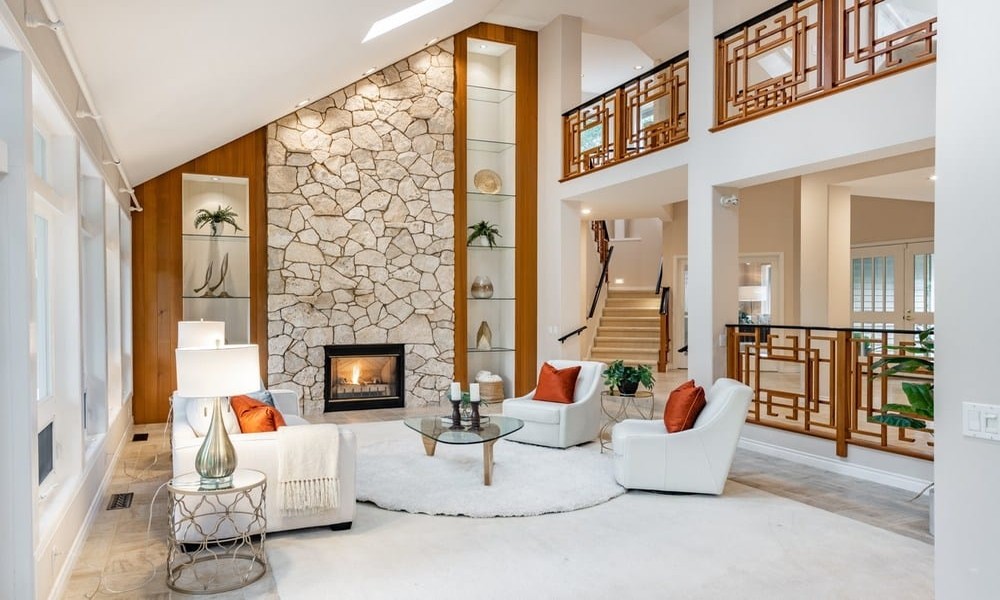
Stone accent walls introduce rustic warmth and textural richness. They are particularly effective in properties seeking to connect the interior with natural outdoor landscapes.
For contemporary drama, colour blocking transforms a surface. Vertical stripes in deep green or orange-brown add dimensional interest. Painting these directly over a fireplace magnifies the effect.
Strategic placement is crucial. The feature wall should remain visible from primary seating. Lighting with sconces or spots then emphasises texture for evening ambiance.
Living Room Accent Wall Material Guide
|
Material |
Best For |
Visual Effect |
Consideration |
|
Plaster Finish |
Modernising fireplace surrounds |
Adds subtle depth and craftsmanship |
Complements rather than competes with existing stone or marble |
|
Stone Veneer |
Creating cosy, rustic atmospheres |
Introduces authentic texture and warmth |
Ideal for mountain homes or nature-inspired living areas |
|
Colour Block Paint |
Adding contemporary edge |
Creates dynamic, dimensional compositions |
Requires precise taping and complementary colour selection |
The best living room ideas balance personal expression with broad appeal. This ensures the space feels both uniquely yours and welcoming to all.
Bold and Innovative Accent Wall Designs
Moving beyond paint and wallpaper, today’s most adventurous designs incorporate three-dimensional objects and integrated functionality. These approaches create immersive feature installations that are both conversation-worthy and useful.
An eclectic gallery wall exemplifies this innovation. Using varied frame styles, mixed media, and strategic layering creates a curated look. This method captures the eye more effectively than a uniform grid.
Functional integration represents a major trend. Incorporating wine storage or display shelving within a colour-blocked accent wall merges aesthetic impact with practical utility. The design serves a purpose beyond decoration.
Bold colour choices directly influence a room’s atmosphere. A California pilates studio uses a vibrant blue to promote energy and focus. This principle works perfectly in home gyms or studios.
Mixed-material patterns and integrated lighting add further complexity. These elements transform a flat surface into a dynamic statement. The result is a truly memorable feature.
Mastering Mural Styles and Wallpaper Techniques
Achieving a customised, artistic look for a room no longer requires a prohibitive budget or complex renovations. Strategic use of wallpaper and mural techniques provides a powerful way to create a stunning feature.
Budget-Friendly Wallpaper Options
Applying wallpaper to a single wall is a cost-effective strategy. It dramatically reduces material and labour costs compared to covering an entire room.
Scenic or botanical prints create immersive environments. They are perfect for bedrooms, offering visual interest when curtains are drawn.
Textured options like grasscloth introduce subtle pattern. They add organic depth without the visual weight of bold graphics.
“Framing a section of expensive wallpaper creates instant, impactful artwork. It’s a clever method to control cost and colour,” notes a London-based interior designer.
For an unexpected twist, consider the ‘fifth wall’. Using wallpaper on a ceiling draws the eye upwards and adds surprise.
Customised Mural Effects
Mural-style wallpaper delivers hand-painted artistry affordably. It is ideal for homeowners desiring a grand feature without the grand price tag.
For truly bespoke solutions, a hand-painted mural by a local artist is best. This approach solves unique architectural challenges like awkward window placements.
Balance is key. Pair a bold mural with jewel-toned upholstery and textured decor. This prevents the wall from overwhelming the space.
Comparing Wall Treatments: Wallpaper vs. Custom Mural
|
Treatment |
Relative Cost |
Installation Time |
Visual Impact |
Best For |
|
Wallpaper Application (one wall) |
Low to Medium |
1-2 Days |
High, with immediate pattern |
Budget-conscious projects, standard rooms |
|
Custom Painted Mural |
Medium to High |
3-7 Days |
Exceptional & Unique |
Bespoke designs, challenging layouts |
Both methods offer a transformative look. The choice depends on budget, timeline, and the desire for a unique narrative.
Embracing Natural Materials and Wood Paneling
Wood panelling introduces a timeless, textural layer that transforms plain surfaces into characterful features. This approach brings organic warmth and a connection to nature into contemporary spaces.
Floor-to-ceiling installations create architectural drama. Extending wood slats across a ceiling forms a cohesive, immersive environment in sleeping rooms.
The versatility of this material is remarkable. Styles range from traditional shaker profiles to contemporary shiplap.
Directional patterns like oversized chevron add dynamic movement. Painted in vivid greens, they can echo surrounding landscapes.
Functional solutions also exist. Wood tambour walls neatly camouflage builder-grade closets whilst maintaining full access.
Pairing a wood feature with plush velvet upholstery creates a rich, sensory experience. This engages both visual and tactile senses.
Homeowners can choose between celebrating the grain with a natural finish or using paint for colour flexibility. Sustainable sourcing of materials, including reclaimed wood, aligns with eco-conscious values.
Guide to Wood Panelling Styles
|
Panelling Style |
Key Characteristic |
Best For |
Texture & Visual Effect |
|
Shaker |
Recessed square or rectangular panels |
Traditional, cottage, or farmhouse interiors |
Adds refined, structured depth |
|
Shiplap |
Horizontal boards with a distinctive rabbet joint |
Coastal, rustic, or modern farmhouse style |
Creates linear interest and casual charm |
|
Horizontal Slat |
Thin, evenly spaced wood battens |
Contemporary, minimalist, and Scandinavian spaces |
Offers a sleek, rhythmic texture |
|
Chevron/Herringbone |
Angled pattern using tongue-and-groove boards |
Statement walls in living areas or entries |
Provides dynamic movement and geometric sophistication |
Creating Depth with Colour Blocking and Texture
Colour blocking and textured finishes offer a powerful method to inject drama and dimension into interiors. This technique transforms a flat wall into a dynamic composition.
Vertical designs use layered tones. A deep green base, mid-tone orange stripe, and light green top section guide the eye upward. This layering creates visual rhythm.
Horizontal blocking works well in loft spaces. An olive green lower section, soft blue middle, and coral upper band generate warmth. This approach adds depth without closing in the room.
Two-colour schemes balance boldness with comfort. Pairing a rich blue with a light grey prevents a space from feeling too dark. It maintains airiness whilst introducing rich colour.
Geometric shapes, like painted circles in green and blue shades, introduce playful sophistication. Crisp paint lines deliver graphic impact suited to contemporary styles.
Textural applications further enhance this effect. Venetian plaster or sponged finishes add physical texture. These surfaces shift appearance with changing light throughout the day.
Colour Blocking Techniques for Dimensional Effects
|
Technique |
Typical Colour Scheme |
Primary Effect |
Best Room Application |
|
Vertical Layering |
Deep green, orange-brown, light green |
Creates height and visual guidance |
Rooms with standard ceilings |
|
Horizontal Banding |
Olive green, soft blue, coral pink |
Adds warmth and spatial definition |
Open-plan lofts or long rooms |
|
Two-Toned Wall |
Van Deusen Blue & Edgecomb Gray |
Balances bold colour with light reflection |
Bedrooms, studies, cosy living areas |
|
Geometric Shapes |
Contrasting greens and blues |
Introduces playful graphic impact |
Modern living rooms, children’s spaces |
These methods also enable psychological zoning. Distinct colour sections can subconsciously define functional areas within an open space. An accent wall provides a safe testing ground for adventurous palettes.
Ultimately, combining strategic paint divisions with physical texture yields remarkable depth. It turns a simple surface into a rewarding, complex focal point.
Practical DIY Accent Wall Projects for Every Home
Hand-painted murals and simple geometric designs offer an accessible entry point into DIY home improvement. These projects empower homeowners to personalise their home affordably. They develop creative skills through hands-on transformation.
Excellent starter ideas include a freehand floral mural or a painted arch that mimics a headboard. Striped feature walls add depth using just masking tape and paint. This is a superb way to achieve a custom look.
Softer effects, like cloud murals or scalloped patterns, suit nurseries. They are achieved with basic painting techniques. Success hinges on preparation. Thorough cleaning, filling imperfections, and using quality primers are critical.
Online tutorials and painter’s tape make complex patterns achievable. A key advantage of a painted feature wall is its flexibility. It can be easily refreshed as tastes change, making DIY a low-risk way to enhance your home.
Kid-Friendly Feature Walls and Playful Designs
Children’s rooms offer a unique canvas for imaginative and durable feature walls that evolve with growing personality. These surfaces should stimulate creativity while withstanding daily play.
Framed graphic wallpaper adds whimsy and visual movement. Jungle cat prints with tigers or lions bring adventurous playful energy to a nursery.
Scalloped walls in pastel colours suit bedrooms beautifully. They allow for loud colour experiments. Colourful abstract leaf prints in greens and pinks create vibrant, stylish decor.
Botanical wallpaper with birds and blooms transforms a curved alcove. This defines a study nook within the room.
Wallpaper Styles for Children’s Spaces
|
Style |
Best For |
Key Benefit |
|
Framed Graphic |
Playrooms |
Contains bold pattern, budget-friendly |
|
Jungle Animal |
Nurseries |
Stimulates imagination and adventure |
|
Scalloped Walls |
Bedrooms |
Soft, adaptable aesthetic |
|
Abstract Leaf Print |
Stylish shared spaces |
Vibrant, modern visual interest |
|
Botanical in Alcove |
Study or reading zones |
Creates a defined functional area |
Durability is paramount. Washable surfaces and scrubbable paints ensure longevity. Growth-friendly designs use neutral bases with interchangeable accents.
This approach lets the space adapt from toddler to teen years. It supports learning through engaging themes like maps or nature.
Innovative Use of Mirrors and Reflective Surfaces
Mirrors and other reflective finishes serve a dual purpose. They act as both decorative statements and practical tools for spatial enhancement.
This approach is particularly transformative in compact areas. It uses light and illusion to solve common design challenges elegantly.
Mirrored Accent Walls for Compact Spaces
A mirrored accent wall is a superb solution for a small powder room or narrow hallway. It instantly makes a confined space feel larger and brighter.
Large-format antique mirror glass creates significant impact. Its aged patina adds warmth and character, avoiding a cold, clinical feel.
Layering smaller decorative mirrors atop a larger mirrored surface introduces clever scale play. This technique creates a collected, visually interesting effect that catches the eye.
Enhancing Functionality with Reflective Finishes
The functionality of a mirrored feature wall extends beyond mere illusion. It provides a practical surface for outfit checks or grooming.
Strategic placement is key. Position the wall to reflect a pleasant view or attractive architectural detail, not clutter.
For a less intense reflection, consider high-gloss paint or metallic finishes. These materials bounce light effectively but are easier to maintain than glass.
When paired with strategic lighting, these surfaces amplify ambient light. They create a luminous, jewel-box effect that draws attention and adds atmospheric depth.
Timeless Board and Batten Accents for Sophisticated Spaces
Few architectural treatments balance heritage charm with modern sensibility as effectively as board and batten moulding. This traditional technique bridges eras, adding vertical emphasis and refined detail to plain surfaces. It instantly elevates the character of any room.
Modern Adaptations of Classic Board and Batten
In an entryway, this treatment creates a powerful first impression. It accentuates ceiling height and establishes a welcoming tone. The spacing between vertical boards can be adjusted to enhance this sense of scale.
Installation is highly flexible. A popular approach uses board and batten on the lower walls with complementary wallpaper above. This creates a sophisticated two-tier feature wall, ideal for dining rooms and hallways.
Colour choices dramatically alter its character. Crisp white offers classic elegance, while deep hues deliver contemporary drama. This modern design approach refreshes a timeless look.
Board and Batten Installation Styles
|
Style |
Typical Height |
Best For |
Visual Effect |
|
Chair Rail |
Approx. 1 metre |
Formal dining rooms, traditional studies |
Adds classic panelling detail without overwhelming |
|
Wainscot |
Lower third of wall |
Hallways, staircases, period properties |
Provides robust protection and structured elegance |
|
Floor-to-Ceiling |
Full wall height |
Contemporary living spaces, feature walls |
Creates an immersive, architectural envelope |
|
Ceiling Extension |
Walls and ceiling |
Modern bedrooms, cohesive design statements |
Delivers a fully integrated, dramatic effect |
The enduring appeal of board and batten lies in its crafted character. It remains a versatile accent for creating a distinguished feature wall with lasting style.
Criss Design‘s Expert Touch on Feature Walls
The difference between a good accent wall and an exceptional one often lies in the application of expert design principles. Criss Design brings a professional touch to these projects, ensuring every decision enhances the room’s character.
Their approach considers the complete architectural context. Spatial proportions, natural light, and the client’s daily life are all analysed. This comprehensive view ensures the final feature wall feels integral, not just added on.
Solutions are always bespoke, tailored to the unique opportunities of individual rooms. This avoids generic templates and creates a truly personalised space. The selection of materials and finishes is meticulous.
Durability, maintenance, and how a surface ages are weighed alongside aesthetic appeal. The accent surface is then coordinated with furnishings and lighting for a cohesive look.
Technical knowledge guarantees flawless execution. Understanding paint chemistry and proper installation prevents future issues. Client collaboration is central, translating inspiration into realistic plans.
This expert touch helps navigate overwhelming choices. It identifies solutions that balance beauty with practical needs like cleanability or acoustics. The result is a transformative wall that delivers lasting satisfaction.
Innovative Techniques Inspired by Criss
Innovative techniques are redefining the very concept of a feature wall. They transform static surfaces into dynamic, multi-sensory experiences.
This approach explores unconventional materials. Metal panels, acoustic tiles, and living plant installations create unique textures.
Advanced colour theory brings artistic nuance. Ombré transitions and complex tonal gradations display remarkable skill.
Integrated technology represents cutting-edge innovation. LED backlighting and smart glass suit connected living environments.
Structural modifications add practical utility. Recessed niches or floating shelves deliver both visual impact and function.
Categories of Material Innovation
|
Category |
Key Feature |
Best Use |
Visual Effect |
|
Acoustic |
Sound absorption panels |
Home offices, media rooms |
Textured, modern finish |
|
Living |
Vertical plant systems |
Wellness spaces, kitchens |
Organic, biophilic energy |
|
Reclaimed |
Architectural salvage elements |
Character homes, studies |
Rustic, storied texture |
|
Metallic |
Brushed or patinated metal |
Industrial lofts, entries |
Modern, reflective surface |
Installation methods also evolve. Peel-and-stick applications allow dramatic, rental-friendly transformations.
Sustainability is a key inspiration. Recycled materials and low-VOC finishes create conscientious design.
These methods, as seen in projects by Criss, prove an accent wall can be both beautiful and intelligent. They truly catch the eye.
Integrating Accent Walls with Modern Living and Workspaces
In the contemporary home, the boundary between living and working areas has become increasingly fluid. This calls for design ideas that support both professional focus and domestic comfort throughout the day.
Bringing Office Ambience to Home Interiors
A hand-painted mural commissioned from a local artist can fill a home office with positive energy. It creates a personalised, non-generic backdrop for video calls.
This approach supports creative communities whilst ensuring a unique installation. In transitional spaces, a gallery wall with varied frames builds anticipation for the work zone.
Colour psychology is key for these functional areas. Blues and greens often aid concentration, while warmer tones can stimulate creative thinking.
Practical considerations are equally important. Sound-absorbing materials like cork improve audio quality for virtual meetings.
Functional accent walls might use magnetic or writable paint. This supports organisation without sacrificing style.
The goal is a space that feels both professional and personally inspiring. A well-designed accent surface achieves this dual-purpose functionality seamlessly.
Conclusion
Ultimately, a well-planned feature wall ranks among the most effective decorating choices for a home. It creates an excellent first impression and revitalises a space, catering to all styles.
This design approach transforms ordinary rooms into expressions of personal personality. It enhances daily living and can boost property value through thoughtful aesthetic upgrades.
The variety of contemporary accent treatments ensures solutions for every budget. From simple paint to complex installations, each balances creativity with practical needs like durability.
It works seamlessly with other pieces in a room. The enduring feature wall adds focal points that resonate emotionally, making any house a personalised home.
FAQ
What is the primary purpose of an accent wall in a room?
The primary purpose is to create a compelling focal point that draws the eye and adds instant personality. A well-designed statement wall introduces depth, colour, and texture, transforming the feel of a space without a full redecoration.
Which wall in a living room is best for an accent feature?
The ideal wall is typically the one you see first upon entering or the natural focal point, such as behind a sofa or fireplace. It should be free of excessive doors or windows to allow the design, whether paint, wallpaper, or wood panelling, to make a full impact.
Are dark paint colours suitable for a feature wall in a small room?
Absolutely. Contrary to popular belief, deep tones like Farrow & Ball’s ‘Hague Blue’ or ‘Railings’ can add tremendous sophistication and perceived depth. They recede visually, making walls feel further away and creating a cosy, intimate atmosphere.
Can I create a textured accent wall on a budget?
A> Yes, several DIY techniques are very cost-effective. Using textured paint with tools like a sea sponge or a trowel can add dimension. Other ideas include applying peel-and-stick wood slats, creating a colour block design with painter’s tape, or using a stencil for a patterned mural effect.
How can I incorporate natural materials into my feature wall design?
Natural materials like reclaimed wood panelling, stone cladding, or even a woven grasscloth wallpaper bring organic texture and warmth. Brands like Mortex and Innovations offer excellent textured finishes. These elements add a tactile, grounding feel to modern interior design.
What are some playful yet stylish ideas for a child’s bedroom accent wall?
Consider using magnetic or chalkboard paint for a creative, interactive surface. A mural featuring friendly animals or a geometric mountain scene offers inspiration. Peel-and-stick decals from brands like WallPops allow for easy updates as tastes change.
How do mirrors enhance an accent wall in a compact space?
Mirrored panels or a gallery wall of decorative mirrors amplify light and create the illusion of a larger room. They add a glamorous, reflective finish that boosts brightness and makes the area feel more open and airy.
Is board and batten a dated look for a modern home?
A> Not at all. This classic technique has seen a major revival. Modern adaptations use clean lines and are often painted in contemporary monochromatic schemes or bold, contrasting colours. It adds architectural interest and dimension to plain walls in a sophisticated way.