
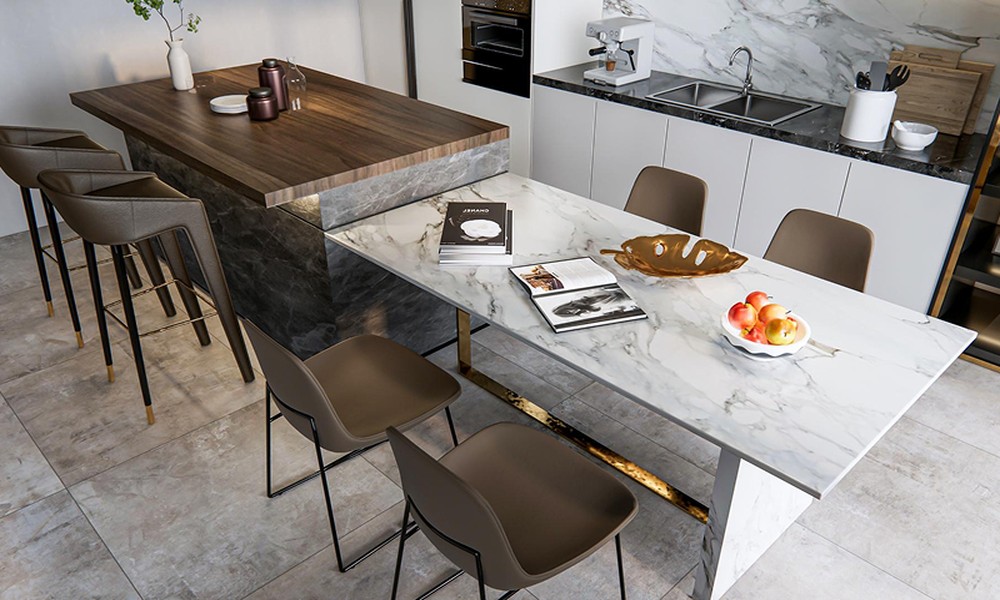
Key Highlights
- Sintered stone offers superior resistance to heat, scratches, and stains compared to natural wood.
- Timber provides a classic, warm aesthetic that develops a unique patina over several decades.
- Maintenance requirements differ vastly, with stone being almost effortless and wood requiring periodic oiling.
- Space and humidity in the local climate significantly impact the longevity of organic furniture materials.
Introduction
You walk into a showroom and see the honeyed grains of walnut or oak, feeling that immediate pull toward a traditional family heirloom vibe that promises to age gracefully alongside your children. Choosing the best dining table in Singapore often feels like a high-stakes tug-of-war between the soul-stirring warmth of natural timber and the indestructible sleekness of modern engineering.
On the other side of the aisle stands the sintered stone dining table, boasting a surface that looks like Italian marble but possesses the toughness of a diamond. This choice isn’t just about what looks good on your Instagram feed but rather about how you actually live, eat, and occasionally spill red wine during a Friday night dinner party. Singaporean homes face unique challenges like high humidity and compact living spaces, meaning your furniture has to work twice as hard to stay looking pristine year after year.
Sintered Stone: The Modern Powerhouse
If you are the type of person who cringes every time a hot pot is placed directly on a surface without a trivet, the sintered stone dining table in Singapore is your absolute best friend. Created through a process of extreme heat and pressure that mimics the formation of natural stone in a fraction of the time, this material is non-porous and virtually impossible to stain. You can chop vegetables directly on the surface or let a puddle of curry sit overnight without the slightest hint of a permanent mark appearing the next morning.
Because the slabs are manufactured to be incredibly thin yet remarkably strong, they fit perfectly into the minimalist aesthetic currently dominating local interior design trends. Many homeowners find that the stone’s ability to resist bacteria growth makes it a much more hygienic option for families with young toddlers who tend to eat directly off the tabletop.
The Timeless Allure of Natural Wood
There is an undeniable psychological comfort that comes from a wooden dining table in Singapore, as it brings a slice of the natural world into our concrete high-rises. Wood feels warm to the touch and dampens the clatter of cutlery, creating a softer acoustic environment that encourages long, lingering conversations over coffee. Unlike the uniform look of stone, every plank of wood tells a story through its knots and swirling grains, ensuring that no two pieces are ever identical.
However, owning a solid wood piece in our tropical climate requires a bit of a commitment because the material breathes, expanding and contracting with every spike in humidity. You have to be prepared for the occasional sanding and re-oiling to keep the surface from drying out or becoming susceptible to water rings from a cold glass of Milo.
Durability Meets Daily Reality
When we look at the long-term cost of ownership, a sintered stone dining table in Singapore often wins on the sheer basis of being “set and forget” furniture. It does not chip easily, it will not fade under the harsh afternoon sun streaming through your floor-to-ceiling windows, and it remains indifferent to the acidic nature of lemon juice or vinegar. Timber tables are beautiful, yet they are vulnerable to the dreaded “white ring” caused by heat and moisture trapped in the finish, which can be a nightmare to repair without professional help.
If your household is a chaotic hub of homework, crafts, and heavy cooking, the resilience of engineered stone provides a level of peace of mind that organic materials simply cannot match. On the flip side, wood can be refinished and restored to its original glory even after decades of abuse, whereas a catastrophic crack in stone usually means the entire slab needs replacing.
Which One Fits Your Singaporean Lifestyle?
Choosing between these two depends heavily on your tolerance for maintenance and your desire for a specific sensory experience. If you value a sleek, maintenance-free lifestyle where your furniture looks exactly the same on day one thousand as it did on day one, then a sintered stone dining table in Singapore is the logical investment.
Those who view their home as a developing gallery of life’s memories might prefer the way wood “collects” history through its minor dings and scratches. Consider your floor plan as well; stone often feels lighter and more “airy” in a small BTO flat, while a chunky wooden table can sometimes overwhelm a modest dining area.
Conclusion
Ultimately, both materials offer incredible value if they align with your daily habits and aesthetic goals. Sintered stone provides an industrial-strength solution for the modern, busy lifestyle, while wood offers a soulfulness that connects us back to nature. Consider your priorities regarding heat resistance, cleaning time, and tactile comfort before making your final decision.
Ready to find the perfect centrepiece for your home? Contact Maxi Home today for the finest home furniture in Singapore and discover the table that truly speaks to your style!