

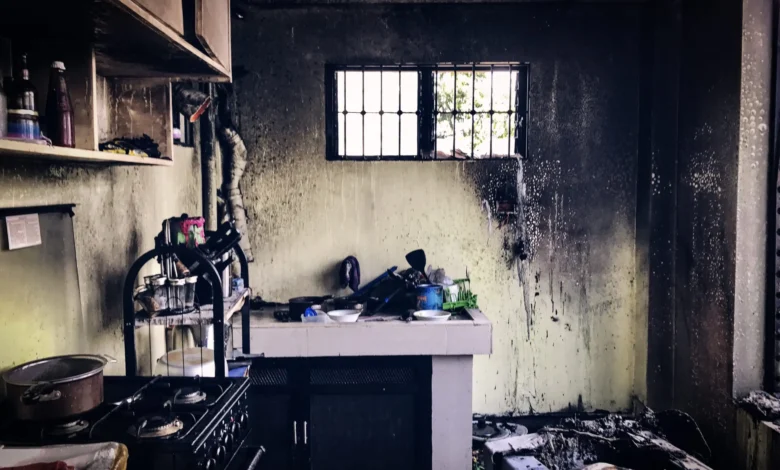
Kitchen fires are one of the most common causes of smoke damage in homes. Even when flames are small and contained, the smoke and grease released during a kitchen fire can spread quickly and cause serious damage. Kitchens present unique restoration challenges because grease, soot, and strong odors combine to create residue that is harder to remove than smoke from other areas of the home.
Why Kitchen Smoke Damage Is Different
Kitchen fires often involve grease, oils, and food products. When these materials burn, they produce a sticky type of smoke residue that clings tightly to surfaces. This residue spreads beyond the stove area and settles on cabinets, walls, ceilings, appliances, and nearby rooms.
Unlike dry smoke, greasy residue does not wipe away easily. It bonds to paint, wood, and metal surfaces. If not cleaned correctly, it causes staining, discoloration, and odors that return over time.
How Grease and Soot Spread Through the Kitchen
During a kitchen fire, smoke rises quickly and moves outward. Cabinets, range hoods, and ceiling areas are usually the most heavily affected. Grease particles mix with soot and settle into seams, corners, and ventilation systems.
Appliances such as refrigerators, microwaves, and dishwashers absorb smoke residue through vents and seals. Even dishes and cookware stored in closed cabinets can become contaminated. Because kitchens connect to living spaces, smoke often spreads into adjacent rooms within minutes.
Odor Problems After Kitchen Fires
Smoke odors from kitchen fires are especially strong and persistent. Grease-based smoke penetrates deeply into materials and releases odor whenever temperatures rise or humidity increases. Homeowners often notice smells returning days or weeks after cleaning.
Using air fresheners or cleaning sprays only masks the odor temporarily. As long as grease residue remains, the smell will come back. This makes professional deodorization essential for full recovery.
Why DIY Cleaning Falls Short in Kitchens
Kitchen smoke damage is one of the hardest types for homeowners to clean themselves. Household cleaners are not designed to break down grease-based smoke residue. Scrubbing can spread contamination or damage cabinet finishes and paint.
Painting over smoke-stained cabinets or walls without proper cleaning leads to stains bleeding through and odors trapped underneath. Appliances cleaned on the outside may still hold smoke residue inside, causing ongoing smells.
How Professional Kitchen Smoke Restoration Works
Professional restoration teams start by inspecting all kitchen surfaces and nearby areas. They identify grease-based smoke residue and choose cleaning methods that safely break it down. Cabinets, walls, ceilings, and appliances are cleaned using specialized agents that remove residue without damaging finishes.
Advanced deodorization methods neutralize odors trapped in materials and air spaces. Ventilation systems, including range hoods and nearby HVAC ducts, are cleaned to stop odors from spreading. Items that cannot be restored safely are documented and replaced.
“Kitchen smoke damage is one of the toughest types of restoration because grease makes everything stick,” says David Singleton, owner of Seattle Restoration Pros. “Professional restoration is the only way to fully remove grease, soot, and odors without causing more damage.”
Protecting Your Kitchen After Smoke Damage
If your kitchen experiences smoke damage, avoid using appliances or wiping surfaces with household cleaners. Do not cook in the space until it has been inspected and cleaned. Acting quickly helps prevent residue from hardening and odors from spreading deeper into materials.
Professional restoration ensures your kitchen is safe, clean, and fully usable again.
Restoring the Heart of Your Home
The kitchen is one of the most important spaces in a home. Smoke damage can make it unsafe and unpleasant if not handled properly. With professional smoke damage restoration, grease, soot, and odors are removed completely, allowing your kitchen to return to its role as a clean and comfortable gathering place.

