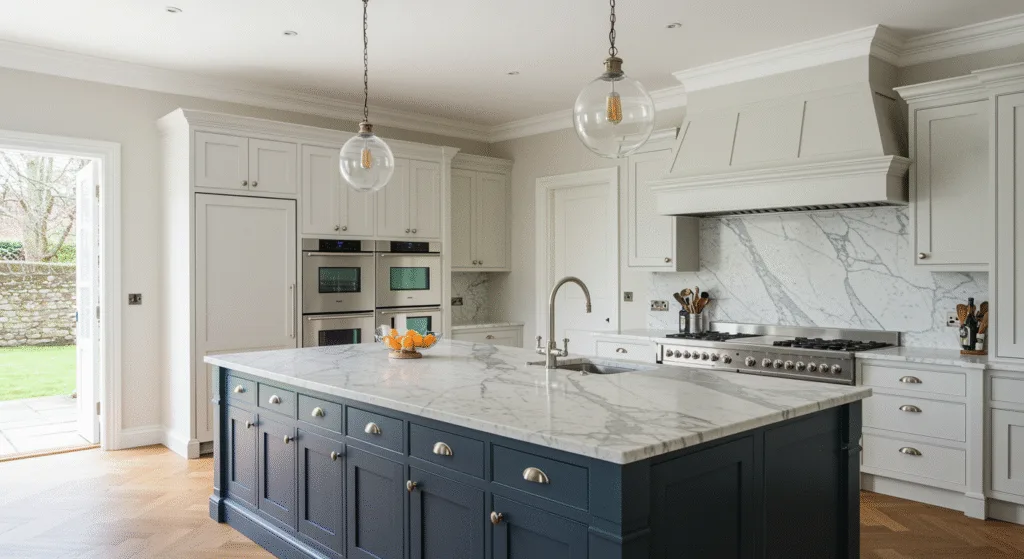
Marble has captivated homeowners and designers for thousands of years as a premier surface material. Its timeless appeal continues to make it a favoured selection for contemporary kitchen spaces. The natural stone’s unique veining and elegant appearance create a sophisticated atmosphere that artificial alternatives struggle to replicate.
Russell Groves, principal architect at Groves & Co in New York, highlights marble’s distinctive qualities. He notes that as a natural material, it offers tremendous variety depending on species selection and cutting techniques. This creates beautiful, one-of-a-kind patterns that simply cannot be found in manufactured surfaces.
Design expert Kelsey McGregor, founder of Kelsey Leigh Design Co., describes marble as “the It girl when it comes to countertops. Everyone else is just trying to be like her.” This perspective underscores the material’s enduring status in interior design circles.
Selecting the perfect marble involves balancing aesthetic preferences with practical considerations. Each variety presents unique characteristics that influence both appearance and performance. This comprehensive guide will walk readers through every aspect of the selection process, from understanding composition to evaluating maintenance needs.
Key Takeaways
- Marble’s natural beauty and elegance have made it a sought-after surface material for millennia
- Each marble variety offers distinct patterns and characteristics unavailable in artificial materials
- Design professionals consistently favour marble for its sophisticated appearance and unique veining
- The selection process requires balancing aesthetic preferences with practical lifestyle considerations
- Informed decision-making ensures the final choice aligns with budget, usage patterns, and design vision
- Understanding marble’s composition and maintenance requirements is essential for long-term satisfaction
Understanding the Beauty and Functionality of Marble
The geological artistry of marble creates surfaces that are both visually stunning and functionally resilient. This natural stone offers a perfect balance between aesthetic appeal and practical performance for residential applications.
Aesthetic Appeal and Natural Elegance
Marble’s visual impact stems from its unique geological formation. Evan Nussbaum, vice president at Stone Source in New York, observes that “nothing in nature matches the whiteness of white marble”. This exceptional purity creates unparalleled brightness in kitchen spaces.
Each slab possesses distinctive veining patterns that cannot be replicated. Becky Shea, founder of Becky Shea Design, notes that marble’s natural beauty adds sophistication to any space. The material’s inherent character ensures every installation is genuinely unique.
Practical Considerations and Durability
Beyond its visual appeal, marble offers substantial durability. High-quality varieties from Carrara, Italy, demonstrate impressive density and relative non-porosity. This makes them resistant to staining when properly maintained.
As a metamorphic rock composed of calcium carbonate, marble requires understanding of its properties. Madelaine Mayer of AD:ROIT Architecture explains that no two slabs share identical characteristics. This natural variation contributes to both the material’s charm and its functional considerations for the home.
The stone’s composition means it reacts to acids, yet its enduring quality makes it a worthwhile investment. Proper care ensures marble surfaces maintain their elegance for years, balancing beauty with practical durability.
Choosing the Right Marble for Kitchen Countertops
When evaluating natural stone options for culinary work surfaces, several key factors guide the decision-making process. Industry professionals emphasise the importance of a systematic approach to ensure the final selection meets both aesthetic and practical requirements.
Key Selection Criteria and Tips
Jason Cherrington, founder of UK-based Lapicida, highlights the extensive range available. “There are hundreds of marble varieties including taupe, green, gold, red, and black,” he notes. This diversity offers homeowners numerous design possibilities for their culinary spaces.
Evan Nussbaum provides practical guidance for countertop selection. He recommends sticking with white marble because acid etching leaves whitish marks more noticeable on coloured surfaces. High-quality Italian options like Calacatta and Statuario remain popular, but equally impressive marbles exist closer to home.
Russell Groves describes the artistic aspect of slab selection. He emphasises that there’s an art to understanding where veining will be located. Placing markings artfully creates countertops that resemble paintings rather than merely functional surfaces.
Technical considerations also play a crucial role. Longer pieces without seams are preferable for a seamless look. When seams are unavoidable, book-matching techniques create mirrored appearances that enhance visual continuity.
Ferris Rafauli offers practical advice for the selection process. He suggests contacting slab facilities in advance to organise tours where they can pull suitable options meeting specific requirements. This proactive approach streamlines the decision-making journey.
Expert Advice from Industry Leaders
Seeking expert consultation proves essential for homeowners navigating the complex world of marble selection. Industry professionals consistently emphasise working with knowledgeable suppliers who understand this natural stone’s unique properties.
Insights from Chiltern Marble Ltd
Specialists from Chiltern Marble Ltd highlight that quality assessment requires trained eyes. They identify subtle differences between varieties that may appear similar to untrained observers. Their guidance helps avoid common pitfalls in material selection.
Professional stone specialists explain the provenance of different marbles and their performance characteristics. Chiltern Marble experts emphasise that successful installations result from informed decisions. They provide insights into appropriate applications for various kitchen environments.
| Quality Indicator | Expert Assessment | Homeowner Consideration | Impact on Design |
|---|---|---|---|
| Veining Consistency | Uniform pattern flow | Aesthetic preference | Visual harmony |
| Surface Hardness | Resistance scoring | Durability needs | Long-term maintenance |
| Colour Uniformity | Natural variation acceptance | Design vision alignment | Space lighting effects |
| Structural Integrity | Fissure and crack inspection | Installation suitability | Functional performance |
The team at Chiltern Marble Ltd reinforces that while marble offers extraordinary beauty, optimal results require professional expertise. Their guidance covers both the material’s potential and its practical limitations for kitchen use.
Exploring Marble Composition and Physical Properties
The fundamental nature of marble begins with its remarkable geological journey deep within the Earth. This beautiful stone originates as limestone that transforms under immense heat and pressure.
This process, called metamorphism, creates the distinctive crystalline structure that defines marble as a metamorphic rock. The recrystallisation alters the mineral composition while enhancing density.
Geological Formation and Natural Origins
During this transformation, impurities like clay and iron oxides create the unique veining patterns homeowners cherish. Pure calcite produces brilliant white varieties, while mineral inclusions generate dramatic colour variations.
Each slab’s character is literally written in stone during this natural process. The time-intensive formation ensures no two pieces are identical.
Physical Properties and Maintenance Requirements
Marble’s density ranges between 2.6-2.8 g/cm³, giving it substantial weight. Its moderate hardness (3-5 on Mohs scale) provides reasonable scratch resistance but requires careful use.
This metamorphic rock has inherent porosity, with Carrara marble absorbing 0.10-0.25% of liquids. Regular sealing becomes essential for stain resistance.
The calcium carbonate composition makes the surface reactive to acids like vinegar or lemon juice. This chemical sensitivity creates etching but proper care maintains the material’s beauty over time.
Understanding these properties helps owners appreciate both the durability and maintenance needs of their marble investment. Proper care ensures long-term satisfaction with this magnificent natural stone.
Types of Marble for Kitchen Countertops
The world of natural stone offers an incredible diversity of marble options for culinary spaces. Homeowners can select from classic Italian varieties to contemporary stones, each possessing a unique character defined by its background colour and veining patterns.
Classic Choices: Carrara and Calacatta
Carrara marble presents a soft white or light grey background. Its fine, feathery grey veining creates a sophisticated yet understated look. This versatile stone is a popular and more affordable option.
Calacatta offers a bright white background with dramatic, bold veins. These patterns often feature shades of gold or deep grey, creating striking contrast. Its premium status and rarity command a higher price point.
Contemporary Options: Nero Marquina and Statuario
Nero Marquina makes a bold statement with its jet-black base and sharp white veining. This high-contrast aesthetic is ideal for modern kitchen designs. Its dark surface requires diligent sealing.
Statuario provides a balanced alternative with a bright white base and well-defined grey veining. It offers refined elegance and improved structural integrity compared to softer marbles.
Other excellent options include Arabescato, with its looping grey veins, and Danby marble from Vermont, known for its enhanced density and stain resistance.
Factors to Consider: Aesthetic, Maintenance and Cost
The journey to perfect marble countertops extends beyond beauty to encompass lifestyle compatibility and financial planning. Homeowners must evaluate how their selection will perform in real-world conditions.
Lifestyle and Usage Patterns
Busy kitchens demand resilient materials. Denser options like Danby or honed Carrara handle daily cooking and spills effectively. These choices offer superior stain resistance for active households.
Matte finishes prove practical for families with children. They conceal scratches and minor stains better than polished surfaces. This finish choice reduces visible wear over time.
Showcase kitchens can accommodate delicate varieties like Calacatta. These luxurious options suit less frequent usage patterns. Their maintenance demands align with decorative purposes.
Budget and Upkeep Considerations
Initial costs vary significantly between marble options. Carrara remains budget-friendly at £40-£80 per square foot. Premium Calacatta commands £100-£250 for its rarity.
Installation adds £30-£60 per square foot to the budget. Complex edge profiles or vein matching increases labour costs. These factors impact the final investment.
Regular sealing protects against stains and etching. Professional services or quality sealants form part of long-term budgeting. Refinishing costs range from £200-£600 when needed.
| Marble Type | Cost per sq ft | Maintenance Level | Best For |
|---|---|---|---|
| Carrara | £40-£80 | Medium | Budget-conscious families |
| Danby | £60-£120 | Low | High-use kitchens |
| Statuario | £80-£200 | High | Showcase spaces |
| Calacatta | £100-£250 | High | Luxury installations |
Honed finishes disguise etching better than polished surfaces. This practical choice maintains appearance despite acid exposure. Proper sealing ensures long-term performance across all options.
Marble Versus Alternative Materials
Homeowners face a significant decision when weighing marble against engineered quartz and natural granite for their kitchen surfaces. Each material offers distinct advantages that appeal to different priorities and lifestyles.
Differences in Durability and Maintenance
Quartz worktops provide superior stain resistance and require minimal maintenance compared to natural stone. Lauren Sullivan of Well x Design observes that while quartz is durable and cost-effective, it “doesn’t quite capture the innate character and uniqueness found in natural stone.”
Granite offers another natural alternative with excellent durability. However, marble’s premium status reflects its historical significance and proven longevity. Bethany Adams notes, “If you are a person who appreciates the inherent beauty of older things, marble is probably for you.”
The maintenance demands of marble countertops differ substantially from engineered materials. Quartz surfaces resist staining and etching effectively. Marble develops a patina that many designers consider part of its charm.
Emma Kemper describes this natural ageing process: “It will have an awkward stage after the first few years… However, once it is well loved and truly lived in it only gets more beautiful.” This evolution contrasts with quartz’s consistent appearance.
Material selection ultimately depends on personal priorities. Those valuing ease of maintenance may prefer quartz. Homeowners seeking authentic natural beauty often find marble’s character irreplaceable despite its higher maintenance needs.
Inspiration: Design Ideas and Cabinetry Pairings
The marriage between marble surfaces and cabinetry creates the foundation for exceptional kitchen aesthetics. This section explores how thoughtful pairings transform culinary spaces into cohesive, stylish environments.
Innovative Design Ideas for Modern Kitchens
Contemporary interior design moves away from monochromatic schemes toward bolder colour combinations. Adnan Anwar of Adnan Anwar Design notes that large kitchens with all-white cabinets and marble can appear monotonous. “I strongly recommend you do a contrast island—or uppers/lowers—if you’re in that situation,” he advises.
Taylor Fusco of Tay Fusco Design confirms this trend towards colourful cabinetry. “Right now we can’t stay away from beautiful bold colours,” she observes. Fusco recommends pairing lighter marble with soft fern green, rich forest green, or dusty sky blue cabinets.
This approach creates visual interest while allowing the marble’s neutral background to anchor the space. The natural veining patterns complement rather than compete with bold cabinetry choices.
Pairing with Cabinetry – Featuring Chiltern Marble
Professional guidance from suppliers like Chiltern Marble helps homeowners visualise successful combinations. Edge profiles significantly impact both style and functionality.
Russell Groves prefers simple eased edges that remove sharpness from 90-degree corners. Jason Cherrington notes the bull’s nose profile remains a timeless favourite. This curved edge reduces chipping risk on brittle marble surfaces.
Veining orientation dramatically alters the marble look. Cross-cutting creates open, flowered patterns ideal for book-matching. Vein-cutting produces linear, striped appearances that complement cabinet lines.
Strategic use of both cutting techniques throughout the space creates fantastic design results. The right pairing ensures marble harmonises perfectly with chosen cabinetry and overall kitchen style.
Conclusion
Successful marble integration into kitchen spaces requires embracing both its timeless beauty and natural evolution. This comprehensive guide has equipped readers with essential knowledge for making an informed choice.
As Russell Groves notes, “The good thing about marble is that you can always sand it down or polish it again.” This restorability makes it a sustainable long-term investment. Evan Nussbaum suggests appreciating marble’s patina development over time, much like aged surfaces in traditional bakeries.
The perfect selection balances aesthetic preferences with practical lifestyle considerations. With proper care, marble countertops maintain their elegance for years, enhancing any kitchen’s style. This natural stone offers enduring value that artificial materials cannot replicate.
FAQ
Is marble a practical material for a busy kitchen?
Marble offers timeless beauty but requires careful maintenance. It is a softer, more porous metamorphic rock than granite or quartz, making it susceptible to scratching and staining. Many homeowners feel its unique character and elegance outweigh the extra upkeep.
What is the difference between Carrara and Calacatta marble?
Both are classic Italian white marbles. Carrara typically has a greyish background with softer, feathery veining. Calacatta is often whiter and features more dramatic, bold veining, sometimes in gold or brown. Calacatta is generally rarer and more expensive.
How do I protect my marble countertops from stains and etching?
Sealing the surface upon installation is crucial. Use a high-quality, penetrating sealer recommended by your supplier, like those offered by Chiltern Marble Ltd. Wipe up spills immediately, especially from acidic substances like lemon juice or wine, and use coasters and cutting boards to protect the finish.
How does marble compare to quartz for kitchen surfaces?
Quartz is an engineered stone known for its exceptional durability and low maintenance. It is non-porous, highly resistant to scratches and stains, and does not require sealing. Marble, being a natural stone, offers a unique, organic look but needs more protection and care over time.
Can marble countertops be repaired if they get damaged?
Minor scratches and etching can often be polished out by a professional stone restoration expert. Deeper stains or chips may require more extensive repair. It is best to consult with your installer, such as Chiltern Marble, for specific advice on care and restoration services.
What cabinet styles pair well with marble countertops?
Marble’s versatility suits various interior design styles. It creates a stunning contrast with dark, modern cabinetry and complements classic Shaker-style kitchens beautifully. The natural veining in the slab can be used to inspire colour choices for the cabinetry and overall space.